 E.O.E
E.O.ELutein CAS 127-40-2: Marigold Source, Free vs Ester Forms and Stability Notes
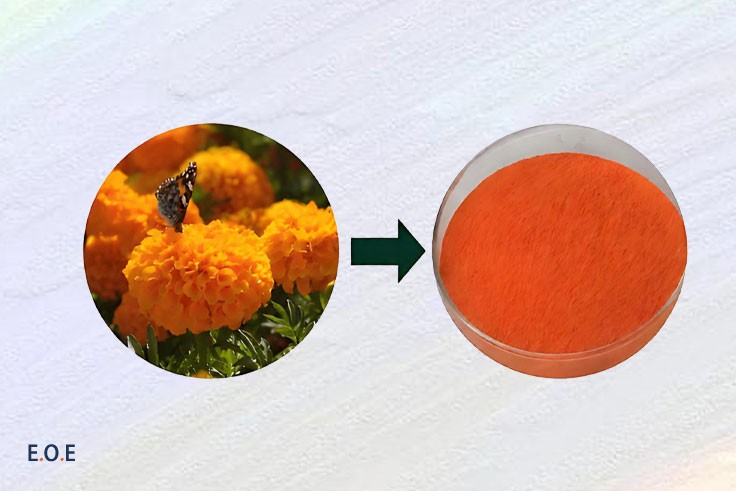
Lutein is the xanthophyll carotenoid that gives marigold petals their orange color — and, in supplements, the pigment that concentrates in the macula of the human eye. It carries CAS number 127-40-2, and almost all commercial supply is extracted from Tagetes erecta oleoresin. If you are sourcing lutein powder or beads, three decisions shape the quotation more than anything else: free versus ester form, concentration, and the carrier system.
Free lutein vs lutein ester
Raw marigold oleoresin contains mostly lutein esters — lutein with one or two fatty acids attached. Two commercial routes exist:
Lutein ester powder. The oleoresin is saponified lightly or not at all, standardized, and beadletized. Esters are more stable against oxidation in the dry state and cost less per kilo of "lutein ester". The body must hydrolyze the ester to absorb the free xanthophyll, and the hydrolysis efficiency in humans is well documented but adds a step.
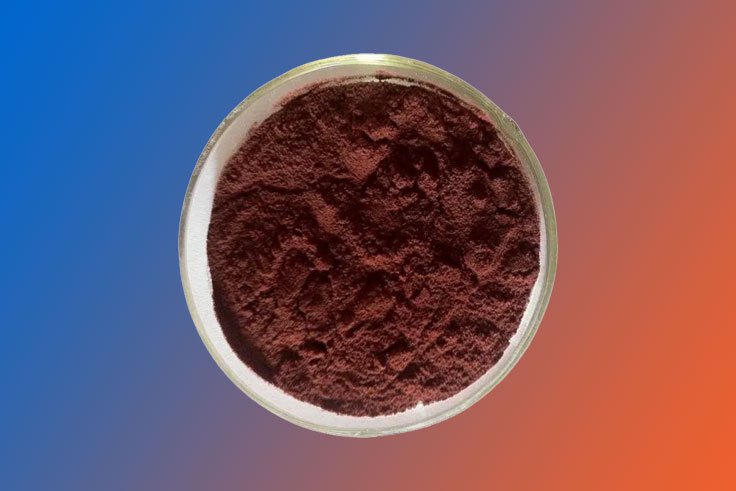
Free lutein powder. Full saponification converts esters to free lutein, which is the form required in most EU novel-food dossiers and the form used in the AREDS2-type eye-health formulations. Free lutein is less oxidatively stable than the ester, so beadlet technology (starch-coated or gelatin-based antioxidants embedded in the matrix) carries more of the quality burden.
Practical consequence: compare prices only after converting both to "free lutein equivalent". An ester at 10% is not the same product as free lutein at 10%.
The concentration ladder
Commercial powders cluster at these standardizations, each with a different use:
Grade | Typical form | Main application |
5% | Beadlet or powder | Feed (poultry skin & egg yolk pigmentation), beverage premixes |
10% | Beadlet | General supplement softgels and tablets |
20% | Beadlet / oil suspension | Eye-health softgels, combination with zeaxanthin |
40%–90% | Oleoresin / oil | Further manufacturing, gummies, clinical formulations |
Zeaxanthin content is the second spec line that matters: macular formulations typically target a 5:1 lutein-to-zeaxanthin ratio, and raw material lots vary, so buyers specify a minimum (commonly ≥0.2% zeaxanthin in a 20% lutein grade).
Stability: what actually kills lutein
Lutein degrades through oxidation and isomerization. The practical triggers, in order of severity:
Oxygen and light. Unprotected powder loses potency visibly within months. Beadlets embed antioxidants (tocopherols, ascorbyl palmitate) in the matrix; oil suspensions rely on nitrogen-flushed packaging.
Heat during processing. Pelletizing, extrusion and hot-fill beverages each cost potency; formulators compensate by overage, typically 10–20% for standard processes, more for extruded pet food.
Moisture in the finished product. Water activity above ~0.6 accelerates carotenoid loss in beadlets.
Storage practice that holds potency: sealed aluminum bags with inert gas, below 25 °C, protected from light. Once a bag is opened, the clock runs fast — portion and re-seal or use nitrogen blankets.
Reading a lutein CoA in two minutes
Assay method: HPLC-UV against a lutein standard; "spectrophotometric assay" results run higher than HPLC and overstate the real content.
Total carotenoids vs free lutein: check which one the number refers to; on ester products the difference can be 30%.
Residual solvents: hexane and isopropanol are the extraction solvents; limits should follow ICH Q3C.
Zeaxanthin and other isomers: cis-isomer content rises with heat abuse; a high cis-trans ratio hints at rough processing.
Sourcing notes
Supply concentrates in a handful of origins, and the market moves with marigold harvest quality — petal oleoresin content varies by season, which shows up as price swings on standardized grades. For steady supply, most buyers hold safety stock of 3–6 months on beadlet grades and qualify two sources for the 5–10% feed-type material.
We supply lutein from 5% feed-grade beadlets to 90% oleoresin, with zeaxanthin specifications matched to your formulation target. Send us the application — softgel, gummy, feed premix or beverage — and we will quote the matching concentration and carrier, not a generic price list.